
Concrete elements on the roadway
Due to the high mechanical loads from braking and accelerating buses or from centrifugal forces in tight turning radii, a concrete surface is very often used, especially at bus stops and roundabouts. However, concrete roadways are often significantly louder than conventional asphalt surfaces. The acoustic quality of the concrete roadway can vary greatly depending on the design. Concrete roadways with longitudinal broom finish exhibit the quietest acoustic values.
A study examined the disruptive effects of such influences in more detail and developed recommendations for practical implementation. Accordingly, optimized surface textures, e.g., of concrete elements (fine and regular broom finish textures) and joints realized at the same level with sufficient joint material between the elements can reduce disruptive impulse noises. The same applies to manhole covers, which ideally should also be installed at the same level (Egger, Bühlmann and Gloor, 2017)1.
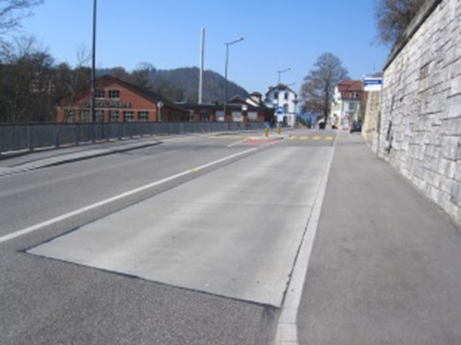
Concrete elements at a bus stop
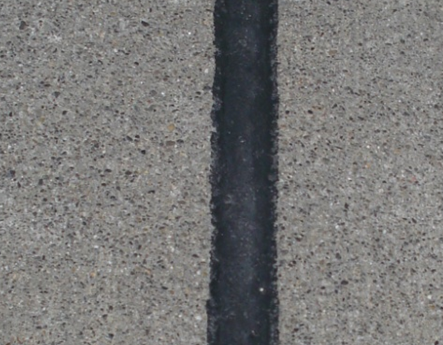
Close-up of a joint between two noise-optimized concrete elements
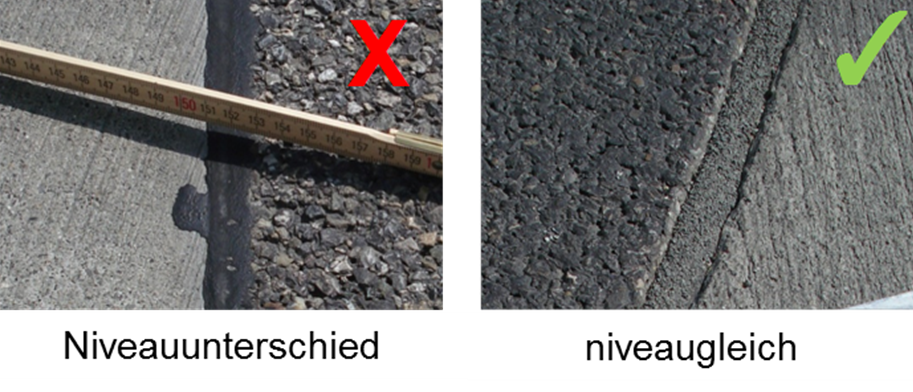
Transition concrete roadway – adjacent surface with level difference (left) and at the same level (right) (Source: (Egger, Bühlmann and Gloor, 2017)2)